
The Links Effect - why affiliates can be key to securing media coverage.
Welcome to the very first Brandlifi Briefing - your no-nonsense guide to navigating today’s shifting media landscape. We’ll show you how to supercharge your PR impact while sidestepping the missteps that send journalists running/yawning/hitting delete.
We’re starting with one of the most important shifts of recent years: the media focus on affiliate-earning opportunities. Affiliate marketing isn’t just a sales channel, it’s now an essential ingredient of PR. By making sure your products are affiliate-friendly, you open the door to more reviews, more inclusion in shopping pages, and more opportunities to reach the consumers who trust these media outlets when making purchase decisions.
Here’s how it works – and why it matters for your PR strategy...
Click. Track. Buy. Earn. Repeat
Tracking Links - When a publisher or content creator is an affiliate partner of a retailer or brand store, they are given unique links to use in their online content – from websites to social media posts.
Click & Track - When someone clicks that link, that retailer receives the information of where the traffic came from, i.e. “This customer came from Publisher X.”
Purchase Logged – If that person buys something (within a set time window, like 24 hours or 30 days), the retailer’s system matches the purchase back to the affiliate link.
Commission Paid – The retailer then reports the sale and pays the publisher a percentage (say 3–10% of the product price) or a fixed fee, depending on the affiliate agreement.
Affiliate Networks – This entire process is increasingly all seamlessly managed through affiliate networks (such as Awin, CJ, or Rakuten) that sit in the middle: they track clicks, log sales, and handle payouts so both sides trust the numbers. Further streamlining is offered by tools such as Skimlinks, which automates affiliate linking for publishers and content creators.
Why it Matters: How Media Companies Make Money Today
The business model for media has changed dramatically. Traditional advertising revenues have declined, and paywalls only go so far. Increasingly, publishers are leaning on affiliate revenue.
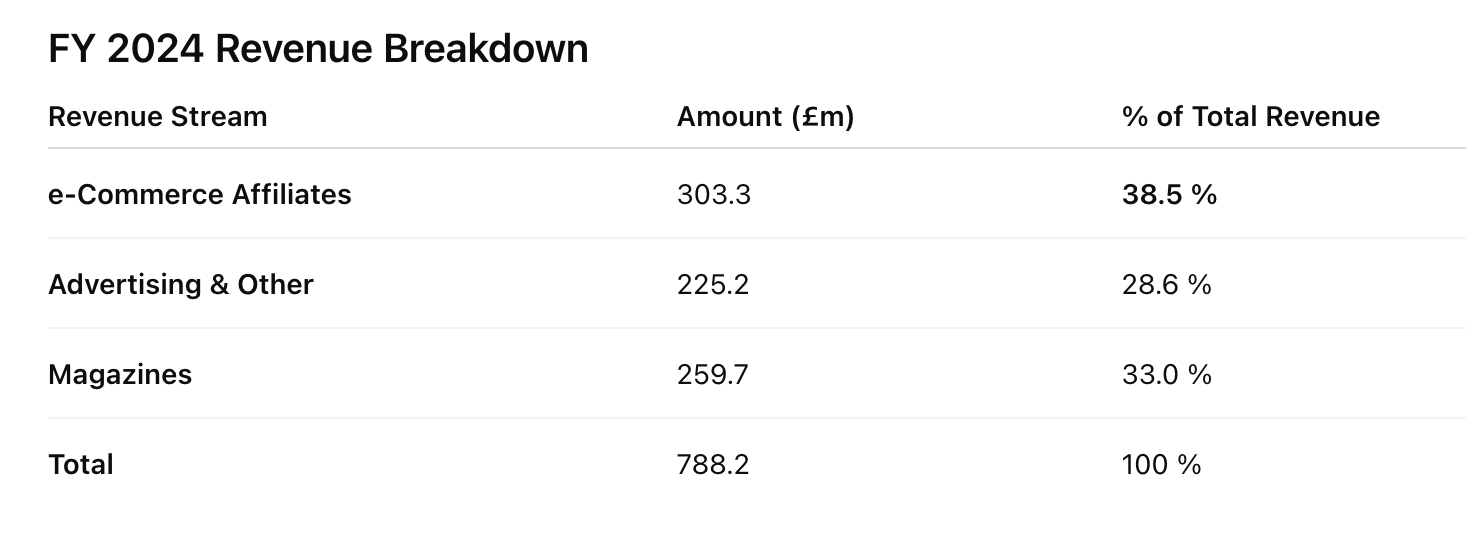
To show the ‘size of the prize’, here’s a revenue breakdown from media giant, Future – home to lifestyle and specialist titles as diverse as What Hi-Fi, T3 and TechRadar to Wallpaper*, Marie Claire, Country Life and Louder.
As you can see, affiliate earnings are now the group’s primary source of income, contributing more than £300 million to its coffers last year.
From national newspapers to lifestyle magazines such as Vogue, there are now dedicated e-commerce editors, shopping and deals writers who are dedicated to maximising affiliate opportunities.
Why it impacts your coverage
An increasing number of media outlets simply won’t include products that can’t be linked via an affiliate program. Your product may be perfect for an article, but if there’s no way to monetise that mention, a rival may take your spot; brands that embrace affiliate marketing are getting more visibility, more mentions, and more clicks.
There are other knock-on effects. For example, your carefully crafted press release or review submission may specifically mention key retail partners, but the media may choose to link to someone completely different. Why? You guessed it: the other retailer offers an affiliate-earning opportunity.
Another key factor? Deal days – from Black Friday to Amazon Prime Day(s), media can gain a significant affiliate-earnings boost around these consumer buying peaks. Editorial staff are metaphorically chained to their desks during these promotions, on a singular quest to generate the deals stories that will drive affiliate clicks. Great news if you have a juicy deal to promote – bad news if you’ve got something else to pitch in.
We’d advise avoiding launches – and certainly in-person events – at these key times (which we’ll always flag ahead in our Brandlifi calendar.)
You’ve got to be in it to win it.
Every brand at every level needs to consider how affiliate marketing fits into its strategy. If you’re not going to play the game, you need to consider what other incentives you’re going to encourage media to feature you – the more traditional ‘pay to play’ routes still work!
If you or your key retail partners already offer affiliate-earning opportunities, ensure that’s being communicated to press where appropriate.
In conclusion, affiliate offers a huge opportunity. We’ll finish with some quick steps to making the most of it.
Your 'Affiliate Action' checklist
✅ Confirm your products are available via affiliate programs (direct or through retail partners).
✅ Audit your Amazon/retail listings for accuracy, availability, and visibility – is the content aligned with PR messaging?
✅ Review your commission structure against competitors.
✅ Where appropriate, incorporate affiliate availability into PR pitches and media kits.
✅ Monitor affiliate performance data to see which outlets drive the most clicks and conversions.
---
Want to know more? Speak to a Brandlifi expert via hello@brandlifi.com